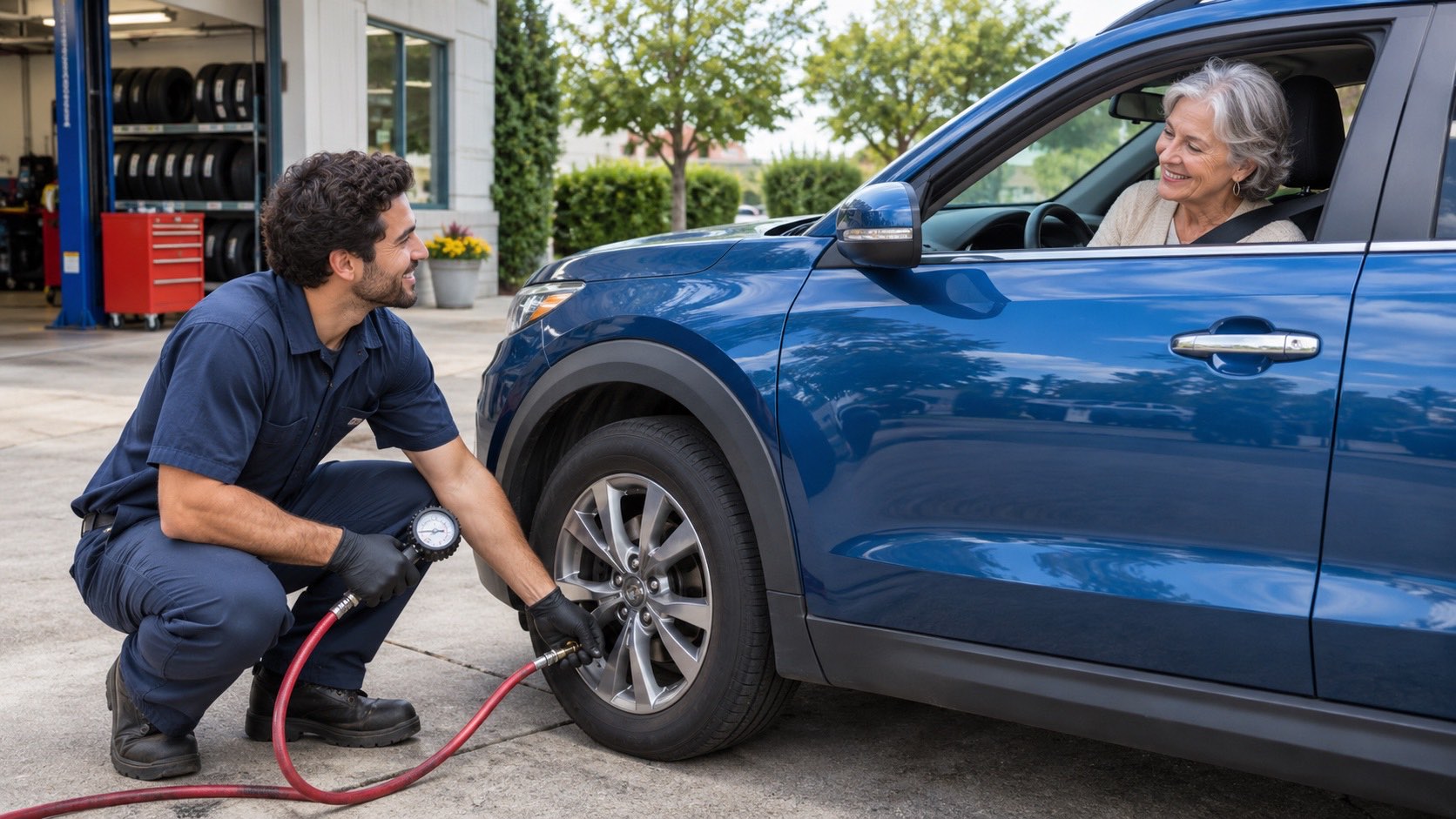
A low-tire-pressure warning can turn a routine errand into a frustrating problem when you can’t add air yourself. Bending down, removing small valve caps, gripping an air hose, or reading a gauge may be difficult because of arthritis, an injury, limited mobility, or vision loss. You might also lack equipment or experience.
You can ask someone to do the work for you. In the United States, tire shops are a good starting point, with repair shops and roadside assistance offering other possibilities.
Start with a tire shop that provides air checks
Look for a tire shop offering a staffed tire-pressure check. That means an employee checks the pressure and adds air, rather than directing you to a self-service pump.
For example, Discount Tire offers free air checks to all guests during normal business hours. Its instructions tell customers to remain in their vehicle and follow the air-check signs. Employees check pressure and treadwear, adjust inflation, and discuss the tires’ condition. That makes it a useful option for someone who has difficulty getting out of the car. Discount Tire: Frequently Asked Questions
Before heading to any shop, confirm its hours and where to pull in. If you need a particular accommodation, explain it when you call.
Ask your regular mechanic or dealership
Your usual repair shop, dealership service department, or oil-change center is another place to contact.
Ask specifically whether someone can check and inflate your tires without another service appointment. Also ask about the price: a shop may provide a courtesy check, but you shouldn’t assume every business offers it free.
If remaining in the vehicle matters, mention that before arriving. Some shops require customers to leave the car before it enters a service bay.
A simple request is enough:“I’m unable to put air in my tires myself. Can someone check and inflate them for me? Is there a charge, and can I stay in my vehicle?”
You don’t need to share personal medical details to explain the assistance you need.
Check whether a gas station offers hands-on help
A nearby gas station may seem like the obvious destination, but an air pump alone won’t solve the problem if you can’t operate it.
Call and ask whether an attendant can inflate your tires. Even at a station that pumps fuel for customers, confirm that tire assistance is available.
Be specific: “Do you have an air pump?” and “Can someone use it for me?” are different questions.
Call roadside assistance if you can’t safely reach a shop
If the tire is flat, visibly damaged, or losing air rapidly, arrange assistance before attempting to drive to an air station. When uncertain, describe the situation to your roadside provider.
AAA’s regional tire-service information describes spare-tire installation or reinflation and towing when a usable spare isn’t available. The help provided depends on the situation and membership coverage. Ask whether inflation of the affected tire is appropriate and available; don’t assume every tire problem can be solved by adding air. AAA: Tire Assistance
When requesting help, explain both the tire problem and any assistance you need because you can’t perform the work yourself.
Ask for the correct pressure—and an inspection when needed
The proper inflation pressure comes from the vehicle manufacturer’s tire-information label, usually near the driver’s door, or the owner’s manual. The pressure printed on the tire itself is not the vehicle’s recommended setting. NHTSA: TireWise
If the same tire repeatedly needs air, ask a technician to inspect it rather than relying on repeated top-offs.
Also mention any dashboard tire-pressure warning. NHTSA explains that these warnings generally activate when a tire is significantly underinflated; they don’t replace regular pressure checks. NHTSA: Tire-Pressure Monitoring Systems
Make help part of your routine
Once you find an accessible, helpful shop, save its phone number and service hours. Ask about a convenient time to return for regular checks.
NHTSA recommends checking tire pressure at least monthly when tires are cold—meaning the vehicle hasn’t been driven for at least three hours. Tell the technician if you’ve just driven there so they can account for warm tires. NHTSA: Tire Maintenance
Getting assistance with tire inflation is a practical way to keep up with vehicle care. A reliable place to stop—and knowing exactly what to ask for—can make the next pressure warning much easier to handle.