
Most vehicle owners think of recalls as unusual events—something that happens occasionally to a particular model or manufacturer.
The data tells a different story.
From 2016 through 2025, the National Highway Traffic Safety Administration recorded 8,959 vehicle safety recall campaigns affecting approximately 334.3 million vehicles.[1]
That works out to an average of about 896 vehicle recall campaigns and 33.4 million recalled vehicles every year.[1]
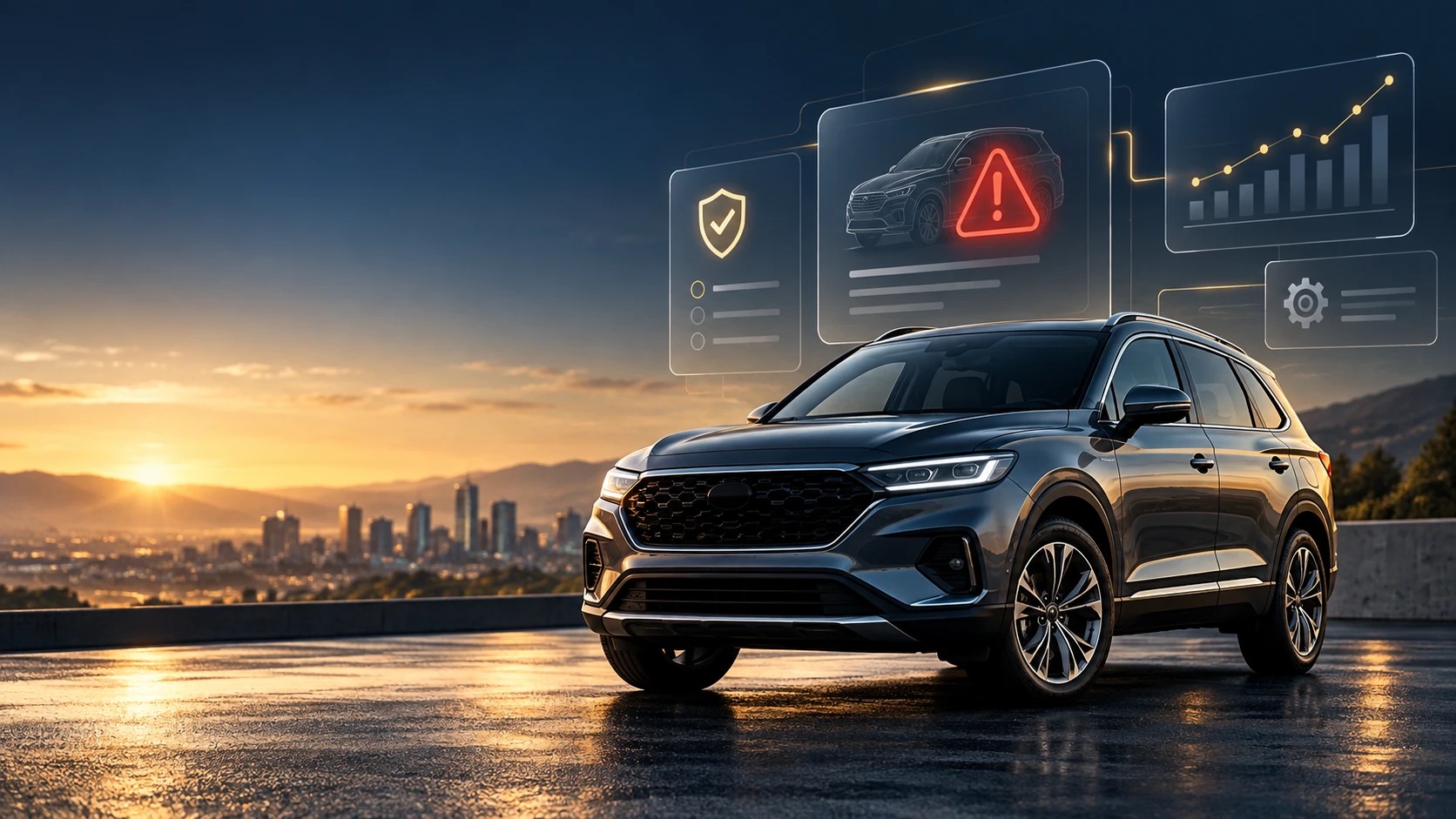
For vehicle owners, the lesson is simple: recalls are not rare. They are a normal part of owning a modern vehicle, and checking for them once when you buy a car may not be enough.
Nearly 9,000 vehicle recalls in 10 years
NHTSA's data shows consistently high recall activity throughout the past decade.[1]
| Year | Vehicle recall campaigns | Vehicles affected |
|---|---|---|
| 2016 | 919 | 50.20 million |
| 2017 | 810 | 30.73 million |
| 2018 | 912 | 29.52 million |
| 2019 | 880 | 38.60 million |
| 2020 | 784 | 31.84 million |
| 2021 | 987 | 28.88 million |
| 2022 | 932 | 31.04 million |
| 2023 | 894 | 34.83 million |
| 2024 | 950 | 29.37 million |
| 2025 | 891 | 29.26 million |
| 2016–2025 | 8,959 | 334.26 million |
These figures include vehicle recalls only. NHTSA separately tracks recalls involving tires, child safety seats and other vehicle equipment.[1]
That distinction is important because broader recall statistics sometimes combine all of those categories.
Are vehicle recalls increasing?
Not exactly.
There were 919 vehicle recall campaigns in 2016 and 891 in 2025.[1] Looking only at those two endpoints would actually show a slight decline.
But that misses the bigger story.
During the entire 10-year period, annual vehicle recalls remained remarkably persistent. Even the lowest year—2020—had 784 campaigns, while 2021 reached 987.[1]
Rather than saying recalls are continuously increasing, a more accurate conclusion is:
Vehicle recalls have remained at a consistently high level for the past decade.
That matters to owners because a vehicle with no open recall today can still become subject to a new recall next month or next year.
A recall campaign is not the same as the number of vehicles recalled
This is one of the easiest recall statistics to misunderstand.
In 2016, NHTSA recorded 919 vehicle recall campaigns affecting about 50.2 million vehicles.[1]
In 2021, there were actually more campaigns—987—but they affected only about 28.9 million vehicles.[1]
How can that happen?
Because every recall is different.
One recall campaign might affect a relatively small number of vehicles, while another can cover hundreds of thousands or even millions.
That means two measurements matter:
Recall campaigns tell us how frequently safety issues are being identified.
Vehicles affected tell us how many vehicles were potentially exposed to those issues.
Looking at only one of those numbers can give a misleading impression of recall activity.
Why was 2016 so high?
The 50.2 million vehicles affected in 2016 stands out in the 10-year data.[1]
Large-scale safety campaigns during this period, including the massive Takata air-bag recall effort, contributed to unusually large populations of recalled vehicles.[1]
This is another reason not to interpret a decline in recalled vehicles as proof that vehicles suddenly became dramatically more reliable.
A small number of extremely large recalls can move the annual total by millions of vehicles.
What actually causes a safety recall?
A recall occurs when a manufacturer or NHTSA determines that a vehicle or vehicle equipment has a safety-related defect or does not comply with applicable federal motor vehicle safety standards.[2]
Manufacturers conduct most recalls voluntarily after identifying a problem, although NHTSA also has authority within the recall process.[2]
The remedy for an affected vehicle can involve repair, replacement, and in some circumstances other corrective action.[2]
For consumers, recall repairs are generally performed without charge when their vehicle is covered by the safety recall.
Your car can receive a recall years after you buy it
A common misunderstanding is that checking a vehicle for recalls when it is purchased settles the issue.
It doesn't.
NHTSA's recall database covers information from 1949 to the present and is updated daily.[3]
Manufacturers continually investigate defects, customer complaints, warranty information, field incidents and other safety information. A problem affecting a vehicle already on the road can therefore result in a recall later in its life.
That is why recall monitoring should be ongoing rather than a one-time event.
NHTSA itself recommends that consumers check for recalls twice a year.[2]
VIN-level recall checking is more useful than simply checking your model
Searching by year, make and model can tell you which recalls may involve that type of vehicle.
But that doesn't necessarily tell you whether your particular vehicle still needs a recall repair.
NHTSA's VIN and license-plate lookup can identify unrepaired recalls associated with a specific vehicle for participating manufacturers.[2]
That distinction is important.
There is a big difference between:
“This model has been recalled.”
and:
“Your vehicle has an unrepaired safety recall.”
The second statement is what an owner can act on.
Finding a recall is only the first step
Knowing about the recall does not necessarily mean the problem has been resolved.
The owner still may need to determine whether a remedy is available, schedule the repair, have the work completed and maintain documentation showing that the recall was addressed.
This is where vehicle management can become valuable.
A useful vehicle history shouldn't simply show that a recall once existed. It should eventually answer questions such as:
- Is the recall still open?
- Is the repair available?
- Does the vehicle need to go to a dealer?
- Can the issue be corrected through a software update?
- When was the recall completed?
- Is the completed repair documented in the vehicle's service history?
Why this matters when buying or owning a used vehicle
Recall history becomes even more important as vehicles change owners.
A used vehicle may have been subject to multiple recalls during its life. Some may have been completed by previous owners; others may still be outstanding.
A new owner shouldn't have to reconstruct that history manually from old paperwork, dealer records and multiple websites.
The vehicle's safety history should travel with the vehicle.
That idea is part of the reason we are building Car Czar: to help owners create a more complete, useful record of what has happened to their vehicle—and what still needs attention.
The takeaway from 10 years of NHTSA data
The biggest finding isn't that recalls are exploding.
It's that they are consistently common.
From 2016 through 2025, NHTSA recorded nearly 9,000 vehicle safety recall campaigns, with more than 334 million vehicles included in those campaigns.[1]
For the typical owner, there is no practical reason to memorize those national statistics.
There is one question that matters much more:
Does my vehicle have an open recall right now?
Car Czar is being built to make questions like that easier to answer by bringing recalls, maintenance, repairs and vehicle records together in one place.
Your car shouldn't have secrets.
Visit Car Czar and join the waitlist to follow the development of a smarter way to manage your vehicle.
Sources
- National Highway Traffic Safety Administration. NHTSA 2025 Annual Report: Safety Recalls. Published March 2026. https://www.nhtsa.gov/sites/nhtsa.gov/files/2026-03/2025-annual-recalls-report.pdf
- National Highway Traffic Safety Administration. Check for Recalls: Vehicle, Car Seat, Tire, Equipment. https://www.nhtsa.gov/recalls
- National Highway Traffic Safety Administration. NHTSA Datasets and APIs — Recalls. https://www.nhtsa.gov/nhtsa-datasets-and-apis