
If you change your own oil or top off your own coolant, you'll eventually end up with a container of used fluid and no obvious place to put it. Good news: disposing of it correctly is almost always free and takes one short stop — the bad options (the storm drain, the backyard, the trash) are illegal, genuinely hazardous, and easy to avoid.
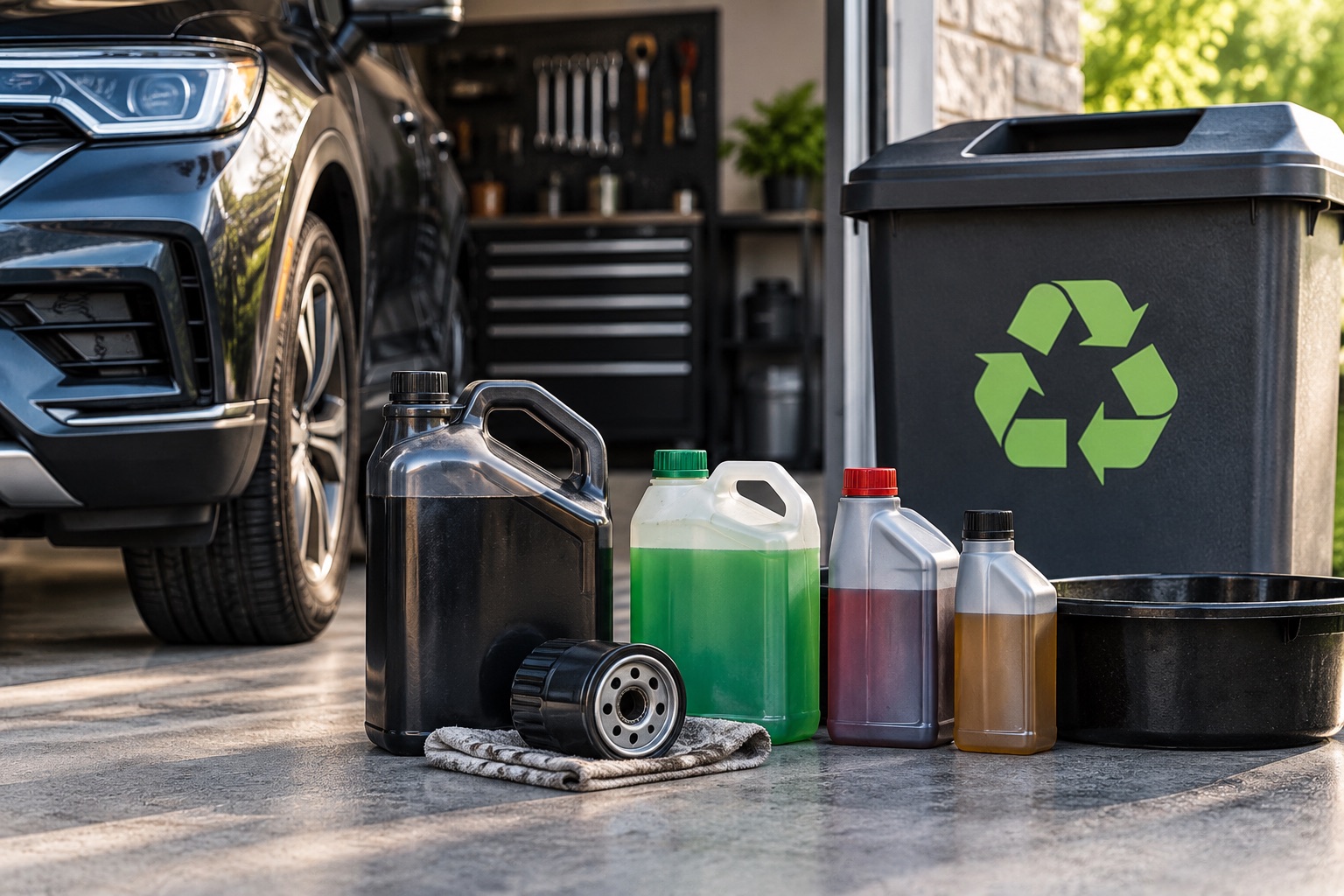
Sort it, seal it, and most of it goes to recycling instead of a landfill.
Auto parts stores — usually free, no purchase required
AutoZone, O'Reilly, Advance Auto Parts, and NAPA generally accept used motor oil for recycling at no charge, typically up to a set quantity per visit (often 5–10 gallons). Bring it in a sealed container — an empty jug from the oil you just poured in works fine. Most of these same stores also take used oil filters for recycling, sometimes asking that you drain them first.
Acceptance of antifreeze, transmission fluid, and brake fluid varies by chain and even by individual store — call ahead rather than assuming.
Municipal household hazardous waste (HHW) programs
Most counties and cities run a permanent drop-off facility or periodic collection events for household hazardous waste, which typically includes:
- Used motor oil and filters
- Antifreeze / coolant
- Transmission and brake fluid
- Gasoline, degreasers, and other automotive chemicals
Search "[your city or county] household hazardous waste" — most municipal sites list hours and locations, and some offer scheduled curbside pickup for oil in small quantities.
Full-service gas stations and repair shops
Many independent repair shops, and some full-service gas stations, will take a few gallons of used oil — sometimes free, sometimes for a small fee, especially if you're a regular customer. This varies a lot by shop, so a quick call before you drive over saves a wasted trip.
Recycling centers and scrap yards
Local recycling centers, particularly ones that handle scrap metal, often accept oil, antifreeze, and lead-acid batteries as part of their normal operation — used oil has real resale value as feedstock for re-refining or furnace fuel, so it's rarely turned away.
Curbside collection, in some cities
A number of municipalities offer curbside used-oil pickup similar to a recycling bin: you leave a sealed, labeled container at the curb on a designated day. It's less common than drop-off options, but worth checking your local sanitation department's site.
Finding the nearest option quickly
- Earth911.com — search by zip code and material (motor oil, antifreeze, batteries, filters) for a list of nearby drop-off locations, addresses included.
- A quick call to your city's public works or sanitation department is often the fastest way to find the nearest free option without digging through search results.
What to know before you go
- Keep fluids separate and sealed. Never mix used oil with gasoline, antifreeze, or solvents — even a small amount of contamination can make an entire batch unrecyclable, and facilities will refuse it.
- Label unmarked containers. If you're not using the original bottle, write down what's inside — many sites won't accept unlabeled fluid.
- Drain filters first. Let a used oil filter sit upside down over a funnel for 12–24 hours before dropping it off — most programs require this, since a saturated filter is otherwise handled as leaking hazardous waste in transit.
- Never pour any of it down a drain, storm sewer, or onto the ground. One gallon of used oil can contaminate up to a million gallons of fresh water, and it's illegal in every U.S. state — fines can be significant, and the environmental damage is real, not theoretical.
- Coolant is toxic to pets and wildlife. Ethylene glycol has a sweet taste that attracts animals, so clean up any spills immediately rather than letting them sit on a driveway or garage floor.
The bottom line
For a typical DIY oil change, your nearest AutoZone, O'Reilly, Advance Auto Parts, or NAPA is almost always the fastest free option for both the oil and the filter. For antifreeze, transmission fluid, or anything else, a quick call to that same store or your city's household hazardous waste program will tell you exactly where it's accepted locally.